

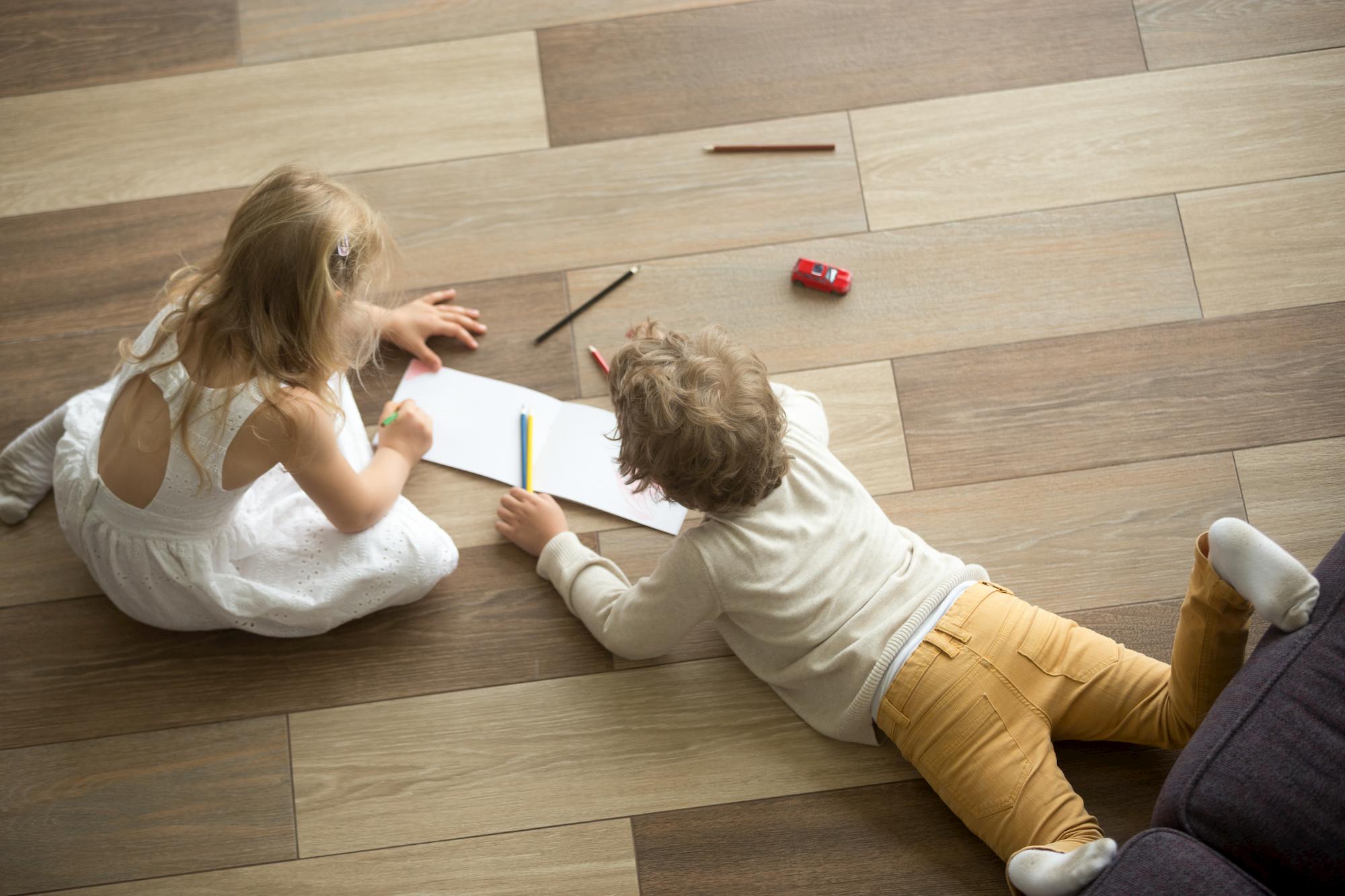

Arguably the first thing that you notice when you enter a place is its flooring. Everybody that enters a space, would never miss the flooring right from the moment they enter till they go out. It is the most noticed and most used area of your house, so it’s extremely important to make an informed decision while choosing the flooring type according to your requirements.
20 types of floors with pictures that are mostly used along with their pros and cons will be explained. So, if looking for this kind of information, don’t go anywhere.

- Solid Hardwood Flooring
This type of flooring is made of 100% natural wood normally from oak, maple, cherry, hickory, hickory, and walnut trees. Every piece of this flooring is different that gives a unique aesthetic of wood to your flooring.
Pros: It is very durable. Oil, wax, or lacquer can be used for finishing treatment, making it more durable and attractive.
Cons: It is prone to scratches. This flooring should not be used in areas with high moisture as it can damage the flooring.
Cost: It can cost between $7 to $23 per square foot including installation expenses.
How to clean and maintain: Use a broom, and wipe. In case of spills, dry ASAP.
- Engineered wood flooring
In this type of flooring, a plywood base is used with a layer of hardwood attached at the top. This is also an all-natural flooring except for the adhesive used to bond plywood and hardwood together. Just like solid hardwood, you can choose from oak, hickory, cherry, or walnut wood.
Pros: This flooring is resistant to humidity and you can install it yourself on any type of subflooring.
Cons: They are not as durable as solid hardwood. Engineered wood flooring cannot be refinished as frequently as hardwood.
Cost: It can cost between $6 to $15 per square foot including installation expenses.
How to clean and maintain: Use a broom, and wipe. In case of spills, dry ASAP.
- Solid bamboo flooring
Bamboo strips are adhered together in the form of planks to give a very light color wood, but finishing can be done to give a darker color just like hardwood. Bamboo is the right choice if you are concerned about the environment as the plant doesn’t need water, herbicides, or pesticides to grow.
Pros: These are easy to install and maintain and are a durable option.
Cons: Its drawback is that it can be damaged by moisture.
Cost: Solid bamboo flooring can cost you anywhere from $7 to $12 per square foot after installation.
How to clean and maintain: Vacuum, broom, or sweep. In case of spills, dry ASAP.
- Engineered and strand woven bamboo
This is a more durable alternative to solid bamboo flooring. The bamboo layer is adhered at the top of the plywood base.
Pros: Its maintenance is easy and can be refinished according to your requirements.
Cons: Some types cannot be refinished
Cost: It costs $9 to $12 per square foot including installation costs.
How to clean and maintain: Vacuum, broom, or sweep. In case of spills, dry ASAP.
- Cork flooring
Cork flooring is another environmentally friendly option as the material is obtained from tree bark without completely cutting the tree. The base of tree bark is adhered to the top wear layer. It is all-natural flooring except for the adhesives used to bind both layers.
Pros: It is a comparatively soft flooring and acts as an insulator as well. It is a hygienic and eco-friendly flooring that can be refinished according to your requirements.
Cons: Cork flooring can be damaged by moisture. It can catch scratches and can be punctured.
Cost: It can cost between $5 to $11 per square foot including installation expenses.
How to clean and maintain: Vacuum, broom, or sweep. In case of spills, dry ASAP. Do refinish after 5 to 7 years.
- Laminate flooring
This flooring is simply a dense fiber plank that is covered with the image of any material of your choice like hardwood, tiles or stone, etc, and then a protective coating is installed.
Pros: This flooring is cost-effective while giving the natural look. Easier to install and is also scratch-resistant.
Cons: Laminate flooring is not as good looking as real wood.
Cost: It can cost between $2 to $12 per square foot including installation expenses.
How to clean and maintain: Vacuum, sweep and remove hard stains using acetone cleaners
- Vinyl sheet flooring
Vinyl sheet flooring is made of PVC plastic and is usually fixed by adhesives. It is all synthetic flooring type.
Pros: Vinyl sheet flooring is very cost-effective and very low maintenance is required. These are easy to install and are water-resistant.
Cons: Being synthetic, there is always a chemical hazard.It can change color with time.
Cost: It can cost between $2 to $7 per square foot including installation expenses.
How to clean and maintain: Mop, vacuum, and sweep
- Vinyl tile flooring
This flooring is the same as vinyl sheet flooring and the only difference is that this is in form of tiles rather than sheets.
Pros: Vinyl tile flooring is very cost-effective and very low maintenance is required. These are easy to install and are water-resistant.
Cons: Being synthetic, there is always a chemical hazard.It can change color with time.
Cost: It can cost between $2 to $7 per square foot including installation expenses.
How to clean and maintain: Vacuum, mop, or sweep. If the floor has hard stains, use acetone cleaners.
- Luxury vinyl tile flooring (LVT)
LVT flooring has the same characteristics as vinyl tile flooring but this one has an extra protective layer making it thicker.
Pros: Low maintenance is required and is very durable and easy to install.
Cons: Being totally synthetic, there is always a chemical hazard.
Cost: It can cost between $5 to $15 per square foot including installation expenses.
How to clean and maintain: Vacuum, mop, or sweep
- NuCore
NuCore is an innovative flooring in which luxury vinyl is used on a waterproof base and cork backing. It looks exactly like wood.
Pros: This flooring is waterproof and durable. It is easy to install and maintain.
Cons: Being totally synthetic, there is always a chemical hazard.
Cost: It can cost between $6 to $12 per square foot including installation expenses.
How to clean and maintain: Vacuum, mop, or sweep
- Linoleum flooring
Linoleum flooring is made by mixing wood flour, cork dust, and linseed oil. This is all-natural flooring.
Pros: It is a budget-friendly flooring option that is soft and durable. Being all-natural, it is ecofriendly.
Cons: It can be gouged and damaged by water.
Cost: It can cost between $7 to $12 per square foot including installation expenses.
How to clean and maintain: Vacuum, mop, or sweep
- Ceramic tile flooring
Another all-natural flooring option is made of baked clay and shale. It is relatively expensive but makes up for its higher cost.
Pros: This flooring is water-resistant and hygienic.
Cons: It is an expensive flooring and hard to install and remove.
Cost: It can cost between $5 to $15 per square foot including installation expenses.
How to clean and maintain: Vacuum, mop, or sweep. Periodically do the refinishing.
- Porcelain tile flooring
This flooring is made of baked clay and a 100% natural product. A wide variety of porcelain tile flooring is available in the market.
Pros: It is generally more durable, harder, and more water-resistant than ceramic flooring.
Cons: It is an expensive flooring and hard to install and remove.
Cost: It can cost between $12 to $18 per square foot including installation expenses.
How to clean and maintain: Vacuum, mop, or sweep. Periodically do the refinishing.
- Stone tile flooring
Stone tiles made of granite, marble, limestone, slate, and travertine are used in this flooring. Different varieties of these stones are available which you can choose from according to your needs.
Pros: It is a natural and durable flooring. It requires low maintenance and is hygienic too.
Cons: It is an expensive flooring and hard to install and remove.
Cost: It can cost between $13 to $28 per square foot including installation expenses.

How to clean and maintain: Vacuum, mop, or sweep
- Carpet flooring
Carpet flooring is the most common flooring used all around the world. This can be made from nylon, wool, acrylic polyester, and polypropylene. This flooring is a combination of natural and synthetic materials.
Pros: It is mostly an affordable option while giving comfort, warmth, and quietness in your home.
Cons: It requires professionals to install and harder to clean. Carpet flooring is the least hygienic option among all others.
Cost: It can cost between $3 to $14 per square foot including installation expenses.
How to clean and maintain: Shampoo and vacuum
- Polished concrete flooring
This is a concrete flooring that is polished to give a high glossy look.
Pros: This flooring is extremely durable with low installation and maintenance costs.
Cons: It is a very hard surface and gets very cold in winter. Cracks can damage the flooring.
Cost: It can cost between $2 to $15 per square foot including installation expenses.
How to clean and maintain: Mop and sweep
- Terrazzo cement
Basic flooring of Portland cement is made, and different marble, metals, glass, shells, and stones are used for decoration.
Pros: It is highly durable and easy to maintain.
Cons: Terrazzo cement flooring is expensive than polished concrete.
Cost: It can cost between $25 to $90 per square foot including installation expenses.
How to clean and maintain: Mop and sweep
- Rubber tile
Rubber tiles are made from both natural and synthetic materials. It gives the characteristics of elasticity to your floor making it very comfortable and suitable for dance floors.
Pros: Rubber tiles are soft, durable, easy to clean, and water-resistant.
Cons: As usually tiles are joined without adhesives, water can leak through its seams and can damage the subflooring.
Cost: It can cost between $4 to $16 per square foot including installation expenses.
How to clean and maintain: Sweep, vacuum, or mop. You should avoid acetone based cleaners.
- Epoxy
It can be either solvent-based, or water-based, both having their own pros and cons. It is similar to paints and is coated on the surface.
Pros: Epoxy flooring is super easy to clean and maintenance cost is low.
Cons: It requires a lot of effort to install this flooring.
Cost: It can cost between $3 to $12 per square foot including installation expenses.
How to clean and maintain: Sweep, vacuum, or mop
- Plastic tile flooring
Plastic tiles are made from plastics such as polypropylene, ethylene, or PVC. You can choose from a wide variety of colors and designs for plastic tile flooring.
Pros: It is easy to clean and maintain.
Cons: Chemicals can cause health issues and water can leak through its seams.
Cost: It can cost between $2 to $12 per square foot including installation expenses.
How to clean and maintain: Sweep, vacuum, or mop
Cost analysis of 20 flooring types:
| No. | Flooring type | Cost in USD per sq.ft (including installation costs) |
| 1 | Solid hardwood flooring | 7-23 |
| 2 | Engineered wood flooring | 6-15 |
| 3 | Solid bamboo flooring | 7-12 |
| 4 | Engineered and strand woven bamboo | 9-12 |
| 5 | Cork flooring | 5-11 |
| 6 | Laminate flooring | 2-12 |
| 7 | Vinyl sheet flooring | 2-7 |
| 8 | Vinyl tile flooring | 2-7 |
| 9 | Luxury vinyl tile | 5-15 |
| 10 | NuCore | 6-12 |
| 11 | Linoleum flooring | 7-12 |
| 12 | Ceramic tile flooring | 11-23 |
| 13 | Porcelain tile flooring | 12-18 |
| 14 | Stone tile flooring | 13-28 |
| 15 | Carpet | 3-14 |
| 16 | Polished concrete | 2-6 |
| 17 | Terrazzo | 25-90 |
| 18 | Rubber tile | 4-16 |
| 19 | Epoxy | 3-12 |
| 20 | Plastic tile | 2-20 |